Vehicles Manager
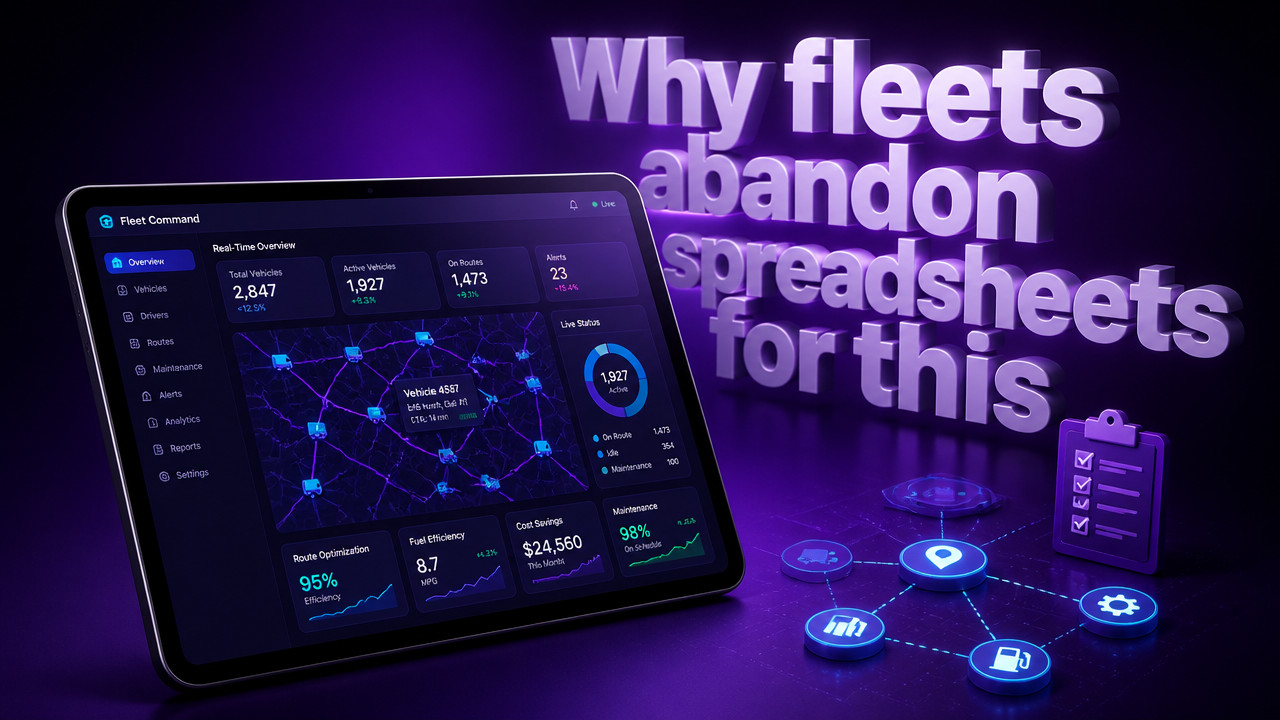
What Software Can Replace a Spreadsheet and WhatsApp for a Small Fleet
The software that replaces a spreadsheet and WhatsApp for a small fleet is a live readiness board: one row per vehicle, one shared status, and no second version of the truth. At 6:40 a.m., two people mark the same van ready and in shop, and dispatch sends it anyway. That is not a data problem. It is a sync problem. A board that holds ready, shop, and next service in one place stops the wrong van from leaving the yard.
Quick Answer: A Readiness Board Beats a Bigger Spreadsheet
The answer is a live readiness board one row per vehicle, three states, and one shared version that updates the moment someone touches it. This is not a GPS system and not an ERP. It is a 2026 category built for yards that need to know which truck can leave, not where it went. According to Simplyfleet, fleet management software automates and centralizes operations that are typically managed through spreadsheets and WhatsApp, such as scheduling and maintenance tracking. A live readiness board for small fleets replaces the morning fight over the last saved file.

- Ready: The vehicle passed inspection and can leave the yard this morning.
- Shop: The vehicle is down for repair and cannot be dispatched.
- Next Service: The vehicle is operational but due for maintenance soon.
The 6:40 a.m. Failure: Why Spreadsheets and Chat Threads Break Under Two Editors
The morning board fails because the spreadsheet was never built for two editors at once. One person opens the file on a phone in the yard. Another person opens it on a laptop in the office. Both mark the same van shop and ready and save. The last click wins. Dispatch still sends the truck because the version on the screen does not match the chat thread buried under fifty messages. This is not a people problem. It is a tool problem.
A contractor fleets staging crews depends on one shared status. When the sheet owner is out, nobody knows which units can leave. The van marked shop still rolls out because the text thread overruled the file. According to Geotab, fleet management software automates and centralizes operations that are typically managed through scattered tools, preventing conflicting data points.
- Two editors: The spreadsheet allows simultaneous edits with no conflict resolution.
- Buried messages: The shop update sits 47 messages deep in the chat thread.
- Sheet owner absent: Only one person knows which version is correct.
- Stale file: The last saved version was from the night shift.
GPS Tells You Where the Van Is. It Cannot Tell You If It May Leave.
Many small fleet operators already pay for GPS and assume it solves the morning board. It does not. GPS answers one question: where is the vehicle right now? It cannot answer the question the yard manager needs answered: is this truck allowed to leave? A van parked at the gate could be ready to roll or waiting on a brake job. The location pin looks identical.
When a fleet says "we already have GPS," they are talking about tracking, not release authority. GPS requires hardware installation, multi-year contracts, and a steep monthly fee per vehicle. A readiness board has none of that. It is a fleet spreadsheet alternative that answers the permission question, not the location question. See $2.99 per vehicle pricing for a board-only option. According to Reach24, modern fleet management systems provide real-time GPS tracking and driver behavior monitoring valuable data, but not a substitute for yard-release status.
| Feature | GPS Tracking System | Readiness Board |
|---|---|---|
| Question answered | Where is the vehicle? | Is the vehicle cleared to leave? |
| Setup | Hardware installation required | Paste a list, no hardware |
| Contract | Multi-year commitment typical | Month-to-month, cancel anytime |
| Hardware | Telematics device in each vehicle | None web and mobile app only |
| Primary user | Dispatch and safety manager | Yard manager and shop foreman |
Three States Are Enough: Ready, Shop, Next Service
The fastest way to fix the morning board is to remove everything that does not matter. A vehicle readiness board needs three states. Not twelve. Not a dropdown of repair codes. Three. Every extra column is a place for disagreement. Every extra status is a debate waiting to happen at 6:15 a.m. when the crew is standing in the rain.
Fewer states mean fewer disputes. The board replaces the spreadsheet fight with a single source of truth that updates live. For trades fleets, this simplicity is the feature, not a limitation. According to Capterra, fleet management software helps ensure compliance with regulations by automatically recording and storing essential data such as vehicle inspections a task that overwhelms a manual spreadsheet.
- Ready: The van passed the morning inspection. It has fuel, the keys are on the hook, and it can be dispatched to the job site immediately.
- Shop: The truck is down. A mechanic has it on the lift, or it is waiting for parts. Nobody stages a crew on this vehicle.
- Next Service: The vehicle can leave today, but it needs an oil change or inspection in the next 200 miles. The shop foreman knows to schedule it.
Rental Lots and Contractor Yards Fail Differently. Pick the Board for Your Failure.
A rental lot and a contractor yard have the same problem conflicting status but the failure looks different. On a rental lot, the booking calendar says the sedan is reserved. The key hook says it is available. By lunch, a customer drives away in a car that should have been in the shop for a brake warning. On a rental fleets board, the reservation system feeds into the same status the mechanic sees.
For contractors, the failure is the crew staged on a truck in the shop. Landscaping crews wait in the parking lot while the foreman calls the mechanic. Movers load dollies onto a truck that was marked "hold" on a text thread nobody checked. A fleet maintenance tracking app would have shown the shop status before the crew arrived.
| Fleet Type | Typical Failure | What the Board Prevents |
|---|---|---|
| Rental | Booking calendar and key hook disagree | Customer gets a vehicle marked shop |
| Landscaping | Crew staged on truck with flat tire | Foreman sees shop status before crew call |
| Movers | Truck loaded but not cleared to leave | Dispatch checks board before assigning load |
| General Contractor | Supers argue over which truck is ready | One shared status, no phone calls |
How to Move Off the Spreadsheet in One Morning, Without a Database Project
Switching from a spreadsheet to a small fleet management software should not feel like implementing an ERP. It should feel like pasting a list. Setup takes 15 minutes. The first month is free no credit card required. If the yard manager can copy a column from Excel and paste it into a web page, they can build a board.
For landscaping crews and contractor yards, the transition happens between the morning coffee run and the first dispatch. There is no migration project. There is no training session. The mechanic, the yard manager, and the owner all land on the same page.
- Assign each vehicle to a yard if you have multiple locations.
- Set the initial status for each vehicle: ready, shop, or next service.
- Add the mechanic and yard manager as users so they can update status live.
- Use the board at the morning meeting instead of opening the spreadsheet.
Who Should Not Buy This: Four Fleets That Need Something Else
Not every fleet needs a readiness board. Some need GPS, routing, or a full ERP. Honesty saves everyone time. A movers running mixed vehicles operation with routing needs should look at logistics software, not a status board.
- One-car owner: If you have a single vehicle, a spreadsheet is overkill. Use a calendar reminder for service. Better fit: paper logbook.
- Routing needs: If you need to optimize delivery routes or track drive time, this is the wrong tool. Better fit: route planning software with GPS.
- ERP seekers: If you want fuel logs, driver logs, parts inventory, and payroll integration, you need a fleet ERP, not a status board. Better fit: full fleet management system.
- Tracking-first fleets: If your primary question is where the truck went after it left the yard, GPS is the answer. This board does not track location. Better fit: telematics platform.
Key Takeaways: What a Small Fleet Should Demand From Its Next Tool
The right tool for a small fleet is the one that answers the morning question: what can leave? It is not the tool that tracks every mile, routes every stop, or integrates with accounting. It is the tool that stops the van marked shop from leaving the yard.
- One row per vehicle: No nested columns, no tabs, no hidden filters.
- Three states only: Ready, shop, next service enough to prevent disputes.
- No hardware: If it requires a device in the truck, it is not a readiness board.
- No multi-year contract: Month-to-month pricing with no setup fee.
- Stops the wrong van: The measure of success is a truck that stays in the yard.
For municipal fleets and other government yards, the same rule applies: the board must prevent the release of a vehicle that is not cleared. The complexity of public sector procurement often obscures this simple requirement.
FAQ: Switching From Excel and WhatsApp to a Fleet Board
Does a readiness board cost more than a spreadsheet?
No. A spreadsheet is free, but the cost of a van sent to a job site when it should be in the shop is higher than the monthly fee. At $2.99 per vehicle, the board pays for itself by preventing one mis-route per month. Compare this to the hidden labor cost of managing a shipping fleets spreadsheet across multiple users.
How long does setup take compared to a new spreadsheet?
About 15 minutes. Paste the vehicle list, assign yards, and set initial statuses. There is no formula to copy, no conditional formatting to rebuild, and no macro to debug. The board is live as soon as the list lands.
Do I need GPS to use a readiness board?
No. The readiness board operates independently of GPS. It answers the permission question, not the location question. Fleets with existing GPS can use both tools side-by-side without conflict.
Is there a contract or setup fee?
No. Pricing is month-to-month at $2.99 per vehicle with no setup fee and no multi-year commitment. The first month is free. Cancel anytime. This is a fleet spreadsheet alternative designed for yards stuck in contract lock-in with GPS providers they do not need.
Can multiple yards use the same board?
Yes. Each yard sees only its own vehicles. The owner or operations manager can view all yards from one account. This prevents the quiet borrowing problem where one location pulls a truck from another lot without updating the sheet.
Mon Oct 19 · Editorial Team