Vehicles Manager
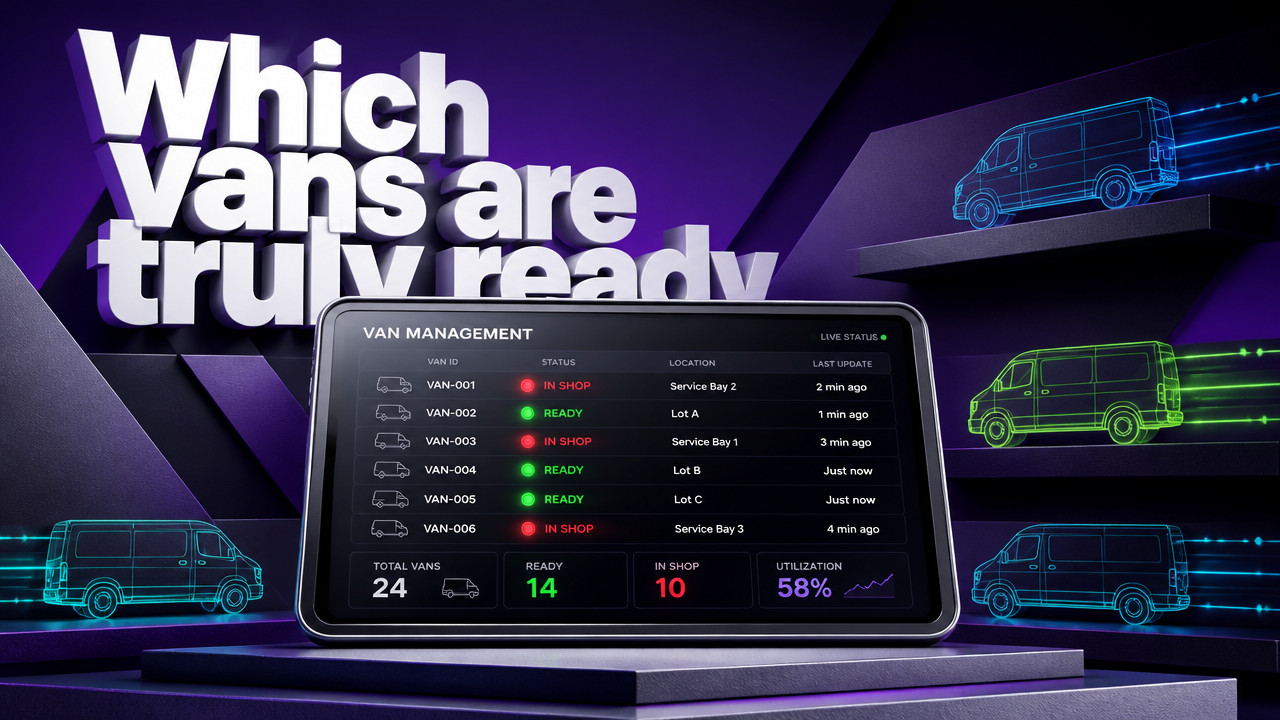
How a Small Fleet Manager Knows Which Vans Are in the Shop vs Ready
A small fleet manager knows which vans are in the shop versus ready by keeping one live row per vehicle with three states: ready, shop, and next service. One owner updates it. Dispatch reads it before anyone leaves the yard. At 06:00, two people mark the same van differently, and the spreadsheet and the WhatsApp thread disagree. That gap sends a broken van out the gate. This guide shows how to close it without GPS, hardware, or a database project.
Quick Answer: One Row Per Van, Three States, One Source
A small fleet manager knows which vans are in the shop versus ready by checking a single shared board that shows only three states per vehicle: ready, shop, or next service. One person owns the update. Dispatch checks before release. No GPS required. No hardware to install. No multi-year contract. The cost is $2.99 per vehicle. The method is simple: if the board does not say ready, the van does not leave.
- Ready: The van passed inspection, has no open repair tag, and is cleared for dispatch this morning.
- Shop: The van has an active work order or pending repair. It cannot leave the yard under any condition.
- Next Service: The van runs today but needs scheduled maintenance soon. A reminder, not a block.
This live readiness board for small fleets replaces the morning shouting match. It stops the text message guessing game. One row. One truth. One quick glance before the keys leave the hook.

Why the 6 A.M. Spreadsheet Sends a Shop Van Out the Gate
At 06:00, the yard is cold, the coffee is weak, and the spreadsheet is already wrong. Two people looked at the same van ten minutes apart. The mechanic marked it "shop" on the whiteboard in the bay. The dispatcher marked it "ready" in the spreadsheet because that was the last saved version from yesterday afternoon. The WhatsApp thread has twelve messages since 05:30, but nobody scrolled back far enough to see the shop note. The van leaves. It breaks down on the first job. The customer calls. The day is shot.
This is not a people problem. This is a system problem. The spreadsheet lives on one laptop. The chat lives on twelve phones. The whiteboard lives in the shop. None of them talk to each other. The gap is not a fuel log or a maintenance record. The gap is one morning row per vehicle that nobody can see at the same time.
- Stale file: The saved spreadsheet is from yesterday afternoon. The van went into the shop overnight.
- Chat drift: The WhatsApp thread moves fast. The shop note is forty messages up. Nobody sees it.
- Sheet owner absent: Only one person knows how the spreadsheet works. When they are out, nobody updates it.
- No shop sign-off: The mechanic has no way to flag the van in the system the dispatcher uses.
According to Carlock, only about 40–50% of small fleets under 10 vehicles use GPS tracking. That means half of small yards run on paper, spreadsheets, and memory. They guess. They hope. They send vans out that should stay in. This problem is exactly what trades fleets running the yard from one sheet face every single morning.
GPS Tells You Where a Van Is. It Cannot Tell You If It May Leave.
GPS answers one question: where is the van right now? It shows a dot on a map. It shows speed, direction, and geofence alerts. It does not answer the question dispatch actually needs at 06:00: is this van allowed to leave the yard? A van can be parked in the lot and have a blown transmission. A van can be at the shop and have no estimate for return. GPS sees the location. It does not see the shop tag, the inspection failure, or the pending brake job.
Readiness is a status problem, not a map problem. You need to know if the van is fit for service, not where it is parked. A readiness board shows the condition. It shows the shop flag. It shows the next service date. It tells dispatch what can leave, not where it will go.
| Feature | GPS Tracking | Readiness Board |
|---|---|---|
| Question answered | Where is the van? | Is the van allowed to leave? |
| Who updates it | Automatic via hardware | Shop or yard manager |
| Hardware required | Yes, tracking device installed | No, software only |
| Contract | Often 2-3 years | No contract, month to month |
| Cost driver | Device + monthly service | Per vehicle per month |
Small contractor fleets often get sold GPS when they only need status. They sign a three-year contract, install hardware, and still have the same morning argument about which van is in the shop. GPS tracks the van after it leaves. A readiness board stops the wrong van from leaving in the first place.
How to Build a Morning Readiness Board in 15 Minutes
You do not need a consultant, a setup call, or a database expert. You need a list of your vehicles, three status options, and ten minutes. The goal is not to track everything. The goal is to answer one question every morning: what can leave? Resist the urge to add columns for fuel, oil, tires, or driver names. Each extra column is a chance for the board to go stale. Keep it to three states. Ready. Shop. Next service.
- Paste your vehicle list. Export from your spreadsheet, type them in, or copy from your accounting system. Unit number or plate is enough. Do not add VINs or serial numbers yet.
- Set up three status columns. Ready, shop, next service. That is it. No sub-statuses. No color codes beyond green, red, and yellow.
- Assign one shop owner. One person marks a van "shop." The mechanic, the shop foreman, or the yard manager. Not three people. One person with the authority to block a van.
- Clear the board each night. Reset every van to ready or carry over the shop tags. The board starts fresh each morning. No history clutter. No archive to dig through.
- Give dispatch view-only access. Dispatch reads the board. Dispatch does not edit the board. The shop updates. Dispatch follows. One source of truth.
- Test it on one morning. Run the board for a single day. See if dispatch checks it. See if the shop updates it. Fix the friction. Roll it out for real.
The pricing is simple: $2.99 per vehicle pricing. No setup fee. No contract. No hardware to buy. If the board saves one breakdown, one tow, or one angry customer call, it pays for itself in the first month.
Rental Lots: When the Key Hook and the Booking Calendar Disagree by Lunch
On a rental lot, the morning starts with the booking calendar. Customer name, pickup time, vehicle class. The keys hang on the hook by unit number. By 10:00, the calendar says the car is rented. The key hook says the car is there. The shop knows the car has no brakes. Nobody told the counter. The customer shows up. The contract prints. The key comes off the hook. The car dies in the parking lot. The customer leaves angry. The review posts negative.
The booking calendar is a sales tool. The key hook is a storage system. Neither tells you the mechanical status of the vehicle. Shop status must live on the same card as the booking. When the counter pulls up the reservation, they see the unit, the booking, and the shop flag in one place. If the van is in the shop, they know before they print the contract.
- Calendar-only system: Booking looks good. Counter prints contract. Vehicle is in shop. Customer waits. embarrassment.
- Calendar plus readiness card: Booking shows unit. Card shows "shop" flag. Counter moves customer to a different unit before the contract prints.
A small rental fleet board puts the shop status next to the booking. It stops the counter from promising a car that cannot leave. It protects the customer experience and the fleet schedule at the same time.
Shuttles, Movers, and Landscapers: Same Board, Different Morning
The three-state board works across different fleet types because the question is the same. Is this unit fit for service today? The context changes. The morning routine changes. The board stays the same.
A shuttle fleet books rides by schedule. The scheduler puts a driver on a route. The board confirms the van is ready. If the van is in the shop, the scheduler sees it and assigns a backup. A mover gets the job sheet at 06:00. The truck is supposed to leave at 07:00. The board shows the truck in shop. The mover grabs a different truck. The customer gets their move on time. A landscaping crew loads mowers and blowers into the trailer. The truck that pulls the trailer has a check engine light. The board shows shop. The crew takes a different truck. The job gets done.
| Fleet Type | Typical 6 A.M. Failure | What the Board Shows |
|---|---|---|
| Shuttle | Scheduler books a van that is in the shop | Shop flag on the unit, scheduler assigns backup |
| Mover | Truck breaks down on the way to the job | Truck marked shop, crew takes spare truck |
| Landscaper | Crew loads trailer on a truck with check engine light | Shop flag, crew takes different truck |
| Contractor | Van sent to job site with active recall or open repair | Shop tag, dispatcher holds van |
According to Oxmaint, fleets using predictive dashboards see 31% fewer unscheduled breakdowns by tracking preventive maintenance compliance and fault trends. A simple readiness board is the first step. It catches the van before it leaves. It forces the shop to flag the problem. It creates a record of what happened. For shuttle fleet board users, this prevents the worst-case scenario: a van full of passengers on the side of the road.
Why Fleets Dump the Sheet: Cost, Contracts, and Single-Person Risk
The spreadsheet costs nothing. The WhatsApp is free. The whiteboard is $15 at the hardware store. That seems cheap until you count the real cost: the van that broke down, the customer who left, the job that got delayed, the mechanic who quit because nobody listened. The hidden cost of the sheet is the risk it creates. Only one person knows how it works. When that person is out, the yard stops.
Fleets dump the sheet when the pain gets too big to ignore. The van marked shop still leaves. The customer gets a bad unit. The sheet owner goes on vacation and everything falls apart. The GPS contract is up and the owner refuses to sign another three-year deal. The triggers stack up. Eventually, the owner decides to try something simpler.
- Trigger: Van in shop leaves the yard. The breakdown costs more than the board ever will.
- Trigger: Sheet owner is out. Nobody knows which vans are ready. Dispatch guesses wrong.
- Trigger: Customer complaint. A rental customer gets a broken car. A contractor misses a deadline.
- Trigger: GPS contract ends. The owner wants out of the hardware and monthly fees.
- Trigger: Mechanic frustration. The shop flags a problem, nobody sees it, the van leaves anyway.
The board is not for everyone. A one-car owner does not need a board. A fleet that wants routing and GPS tracking needs a different tool. A yard that wants a full ERP with parts ordering and payroll needs a bigger system. For movers running tight morning dispatch, the board is the right fit. Simple, fast, focused on one question.
According to Spytec, small fleets making data-driven replacement decisions instead of calendar-based choices improve uptime predictability because they replace a van when its downtime risk outweighs repair costs. A readiness board shows which vans sit in shop the most. It creates the data needed to make that call.
Watch: A Readiness Board Run Through a Real Morning
See how a yard manager uses the board at 06:00. The mechanic updates the shop status. The dispatcher checks the ready list. A van flips from ready to shop in real time. No phone call. No text message. No argument. The backup plan kicks in. The morning stays on schedule.
This is how landscaping crews checking trucks before first job use the board. The crew chief checks the list on their phone. The shop updates from the bay. Dispatch sees the change immediately. The day starts clean.
Key Takeaways: What a Small Fleet Board Must Do Every Morning
The board has one job. Tell dispatch which vans can leave. Everything else is noise. Keep it to three states. Keep it to one owner. Keep it visible to everyone who needs it. No GPS. No hardware. No contract. Just a simple answer to a simple question.
- Three states only: Ready, shop, next service. No sub-statuses. No extra columns.
- One source of truth: The board is the only place dispatch checks. The spreadsheet and chat are retired.
- One shop owner: One person marks a van in shop. Authority to block release.
- No GPS, no hardware, no contract: Software only. Month to month. $2.99 per vehicle.
- Visible to all: Shop, dispatch, and owner see the same board at the same time.
For municipal fleets, the same logic applies. The question is readiness. The answer is a simple board that shows shop status before the keys leave the hook.
FAQ: Shop Status, Spreadsheets, and Small Fleet Dispatch
How does a small fleet manager know which vans are in the shop versus ready without GPS?
Yes, a manager can know without GPS by using a live readiness board. One shared board shows three states per vehicle. The shop updates the status. Dispatch checks before release. No hardware is required. The method costs $2.99 per vehicle. It replaces the spreadsheet and WhatsApp thread with one view.
Why does the spreadsheet fail at 6 a.m.?
The spreadsheet fails because it is stale, siloed, and owned by one person. The last saved version is from yesterday. The chat has new updates nobody sees. The sheet owner is not always there. Two people mark the same van differently. The wrong van leaves. A shared board updates in real time and solves the conflict.
Do I need GPS to track shop status?
No, GPS tracks location, not shop status. A van can be parked in the lot and have a broken transmission. GPS shows the dot on the map. It does not show the repair tag. A readiness board answers the question dispatch needs: is this van allowed to leave?
How long does it take to set up a readiness board?
About 15 minutes for a small fleet. Paste your vehicle list. Set up three status columns. Assign one shop owner. Give dispatch view access. No hardware installation. No contract signing. No training session required. The board works immediately.
What does the readiness board cost?
$2.99 per vehicle per month. No setup fee. No hardware cost. No multi-year contract. The board pays for itself if it prevents one breakdown or one missed job. For a 20-vehicle fleet, the monthly cost is under $60.
Sat Oct 24 · Editorial Team